

Tag Archives: jewellery writer
ImageFASHION, October 2024
Comments Off on FASHION, October 2024
09/20/2024 in Editorial, FASHION
Tagged black diamonds, blue diamonds, brown diamonds, coloured diamonds, Diamonds, engagement rings, fancy color diamonds, green diamonds, jewellery, jewellery editor, jewellery expert, jewellery trends 2024, jewellery writer, Jewelry, jewelry expert, jewelry trends 2024, pink diamonds, yellow diamonds
FASHION, September 2024
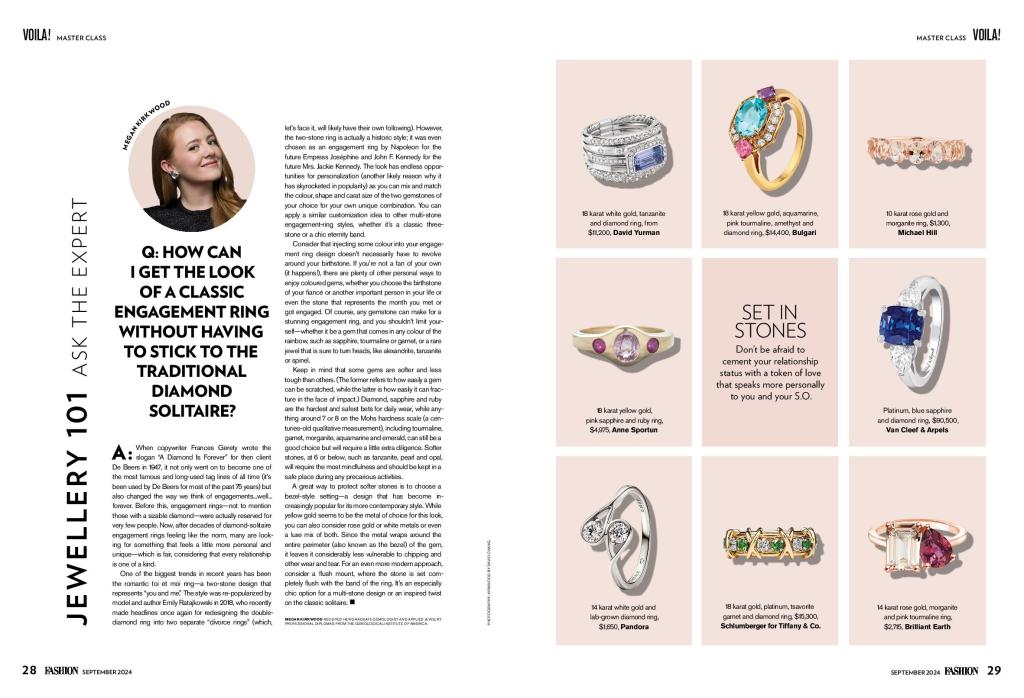
Comments Off on FASHION, September 2024
08/02/2024 in Editorial, FASHION
Tagged aquamarine, blue sapphire ring, coloured gemstones, Diamonds, engagement rings, eternity bands, FASHION, Gemologist, jewellery, jewellery editor, jewellery expert, Jewellery trends, jewellery writer, Jewelry, Lab Diamonds, pink sapphire, ruby, tanzanite, three stone ring, toi et moi, tourmaline, tsavorite garnet, two stone ring
FASHION, Summer 2024
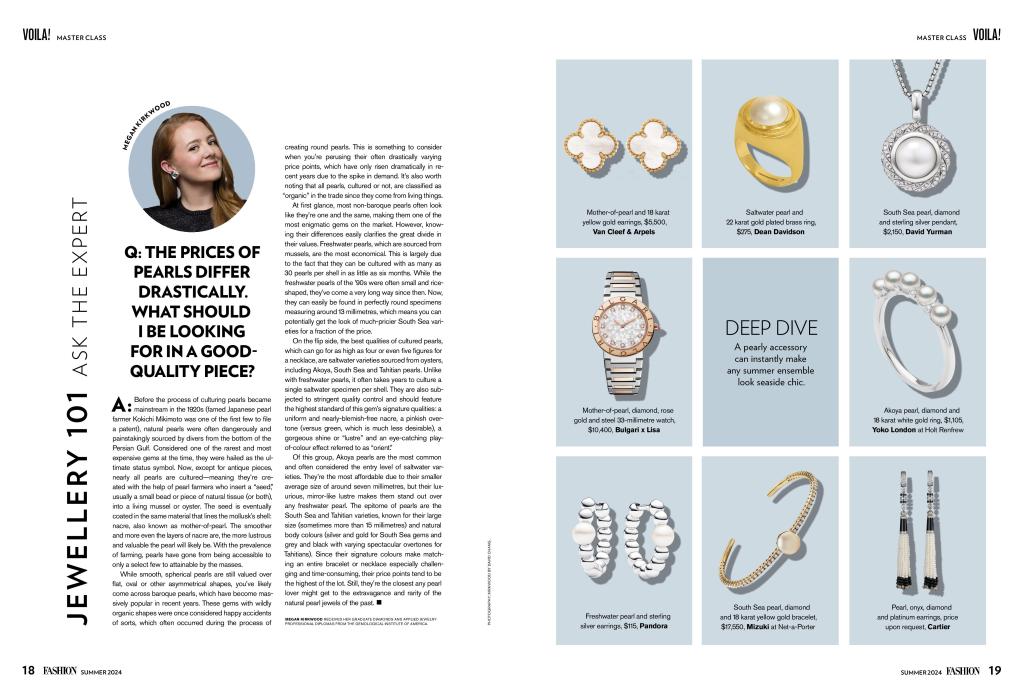
Comments Off on FASHION, Summer 2024
06/05/2024 in Editorial, FASHION
Tagged Baroque Pearls, Freshwater Pearls, gem expert, Gemologist, Gemology, jewellery, jewellery editor, jewellery expert, jewellery writer, Jewelry, Pearl Bracelet, Pearl Earrings, Pearl jewelry, Pearl Ring, Pearl Watch, Pearls, Saltwater Pearls, South Sea Pearls, Summer, Summer Jewellery, Summer Jewelry, Tahitian Pearls
FASHION, April 2024
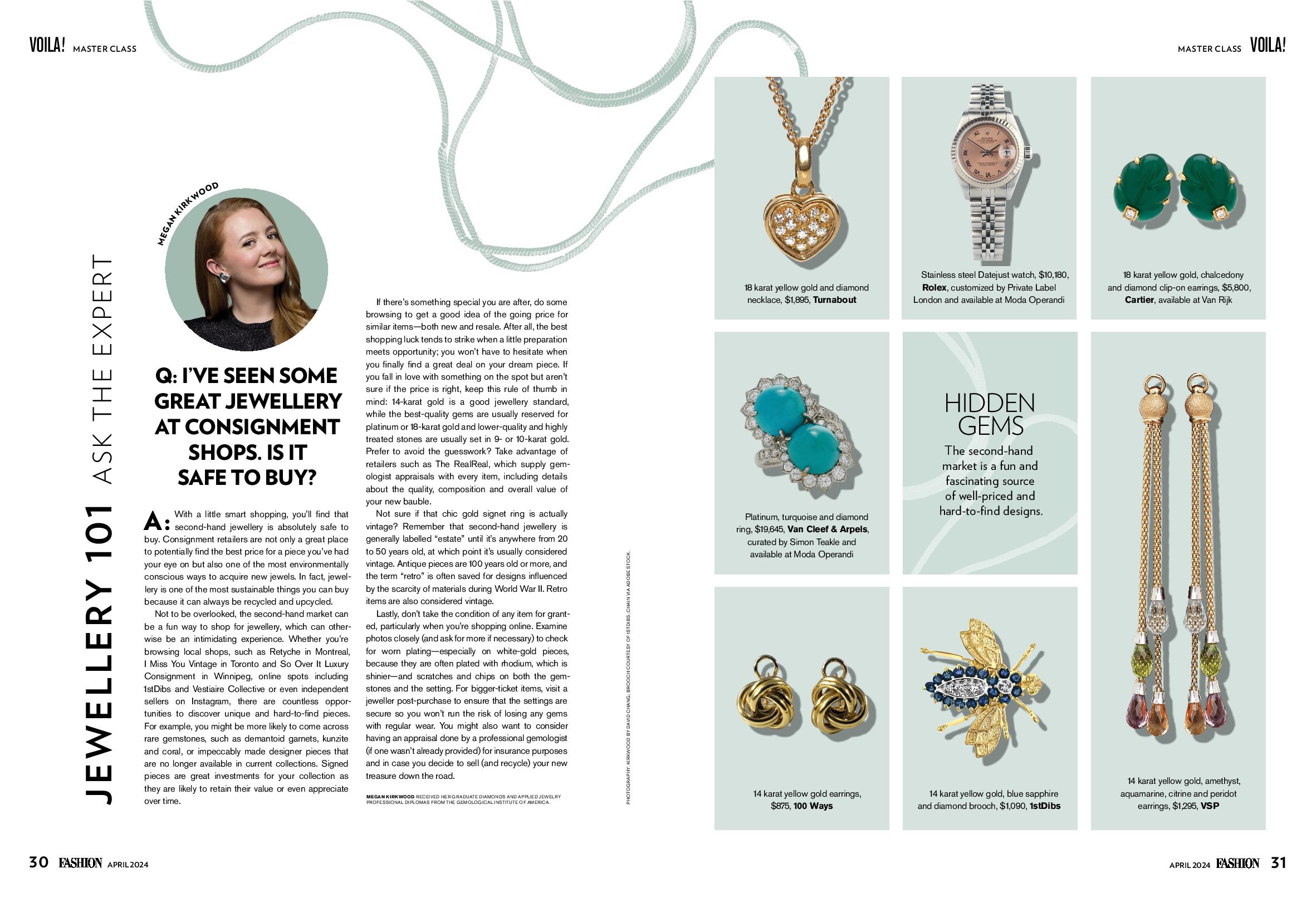
Comments Off on FASHION, April 2024
04/02/2024 in Editorial, FASHION
Tagged antique jewellery, consignment shopping, Diamonds, engagement rings, gem expert, gems, gemstones, GIA Gemologist, jewellery, jewellery editor, jewellery expert, jewellery writer, Jewelry, recycled jewellery, second-hand jewellery, used jewellery, used watches, vintage jewellery
FASHION, Winter 2024

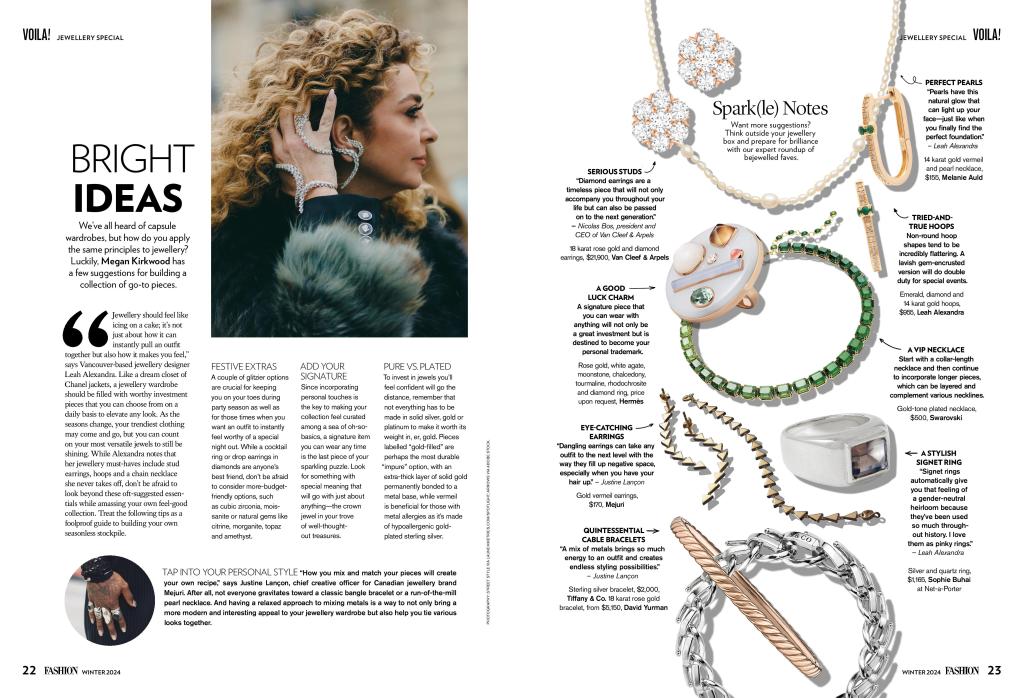

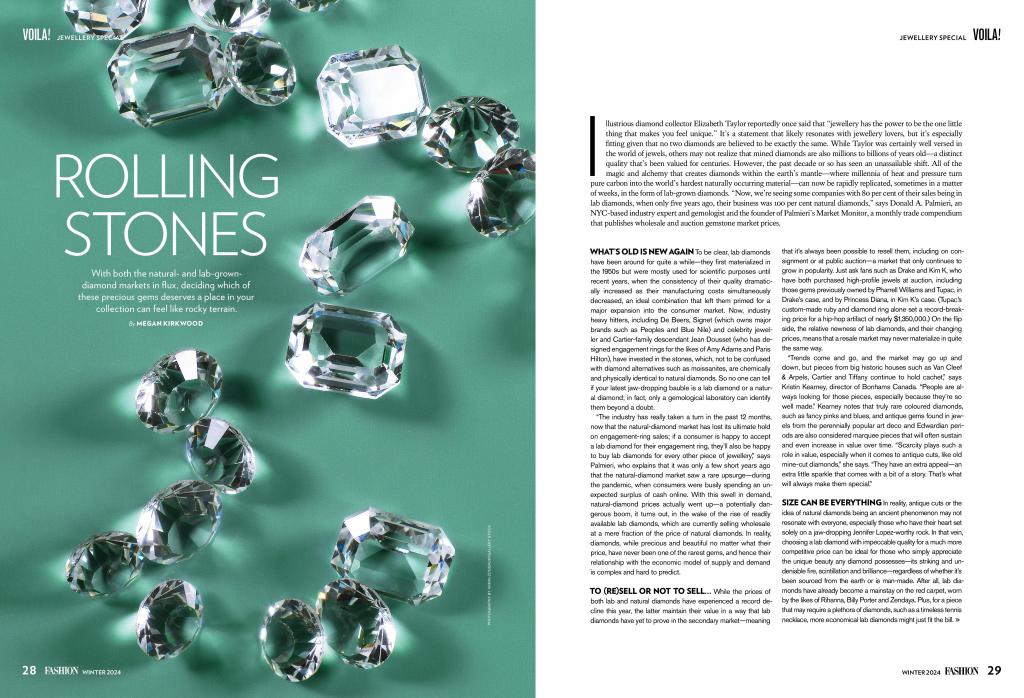
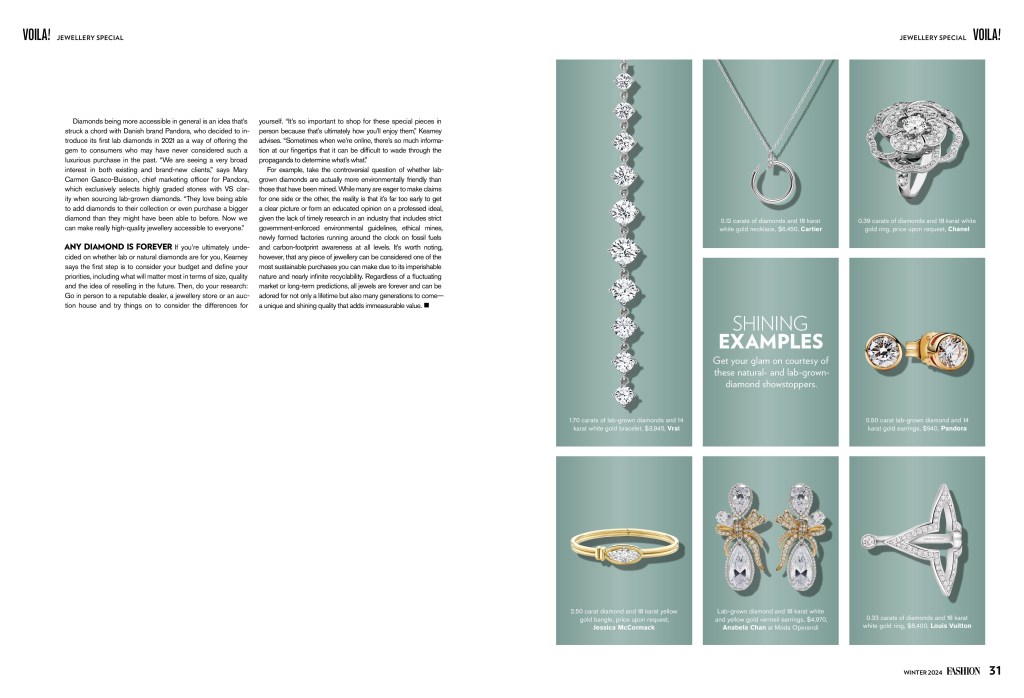
Comments Off on FASHION, Winter 2024
Tagged Buying Diamonds, Diamonds, engagement rings, FASHION, Francesca Amfitheatrof, Gemologist, GIA, jewellery, jewellery editor, jewellery expert, Jewellery Wardrobe, jewellery writer, Jewelry, Lab Diamonds, Louis Vuitton High Jewellery
Katherine James Jewellery Custom Content, March 2023
Why Collectors Love Kyanite
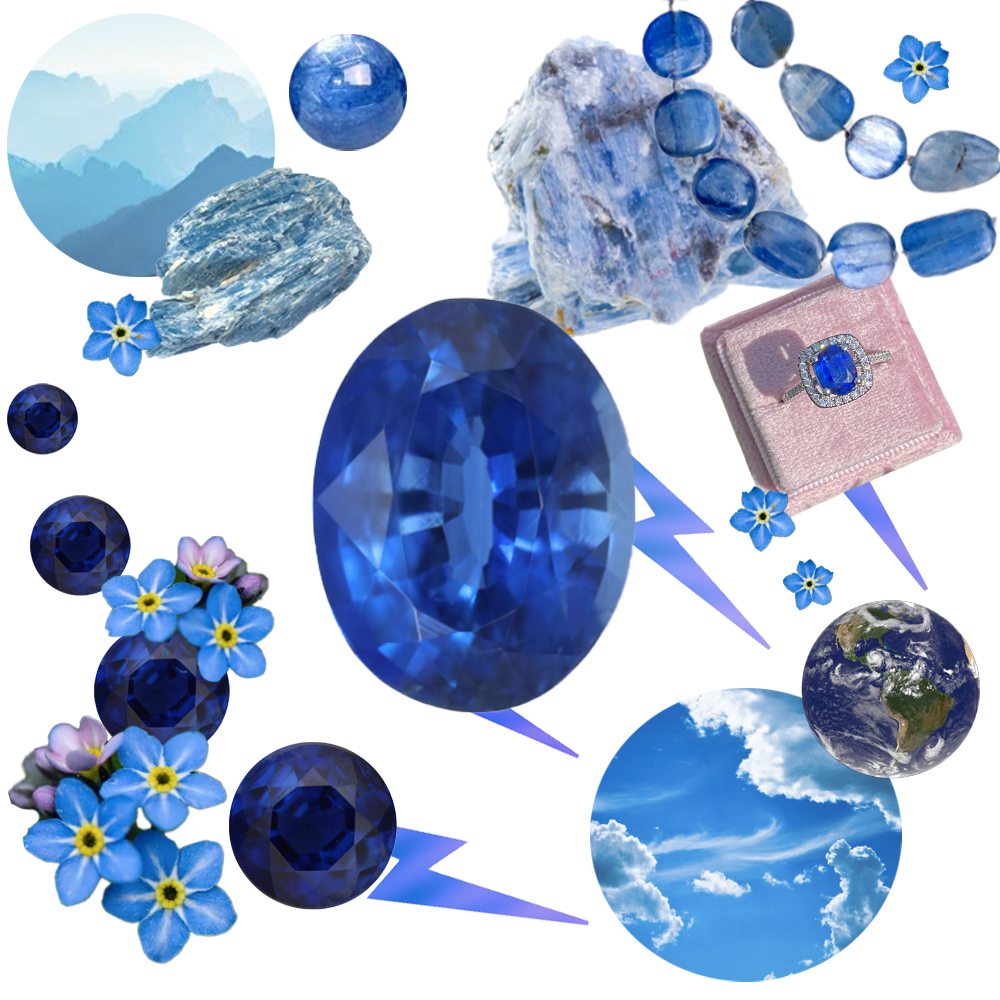
Never heard of Kyanite? You’re not alone. This gorgeous gem is a rare species and usually reserved for collectors alone. In its best qualities, it closely resembles Blue Sapphire. However, it is available in a wide range of light to dark blue colours and can also form in shades of yellow, green and brown, and, like Sapphires, can also be colourless. The name Kyanite even comes from its signature shade, as “kyanos” is the Greek word for dark blue.
Chemically, Kyanite is composed of aluminum, silicon and oxygen, which makes it a close relative of Andalusite. As is with Sapphires, Kyanite gets its beautiful blue hues from trace amounts of titanium and iron, and can sometimes display colour zoning (concentrated bands of colour) or a colour-change effect, showing a reddish to reddish violet hue under incandescent light. Kyanite is scarce, but can be found in Brazil, India, Kenya, Myanmar, Pakistan, Switzerland, Russia and the United States. While this lovely gem is not easy to find in jewellery, it does have the benefit of not often being colour treated.
One of Kyanite’s most unique traits is that it has two different hardness levels along its length and width. Along its length, it ranks at about a 5 on the Mohs hardness scale, while it is a 7 across the width of the crystal. In comparison, this range is similar to Lapis Lazuli or Turquoise through to Amethyst. While wearable everyday, it’s important to treat Kyanite with care and as the rare and delicate precious gem that it is. Avoid wearing it while being especially active, including cleaning, sports, etc. and be especially careful to avoid hard wear when showing it off in a ring. Overall, this lush blue gemstone is a highly unique jewel which is a pleasure and honour to have in your collection and a fantastic conversation piece for any jewellery lover.
Comments Off on Katherine James Jewellery Custom Content, March 2023
Posted in Branding, Katherine James Jewellery, Uncategorized
Tagged blue gemstones, coloured gemstones, Custom Content, Email Newsletter, jewellery, jewellery consultant, jewellery writer, Jewelry, Kyanite
Katherine James Jewellery Custom Content, May 2022
What are Ceylon Sapphires?
The island of Sri Lanka continues to be one of the world’s most important sources of Blue and Fancy-Coloured Sapphires.
Sri Lanka, Island of Gems
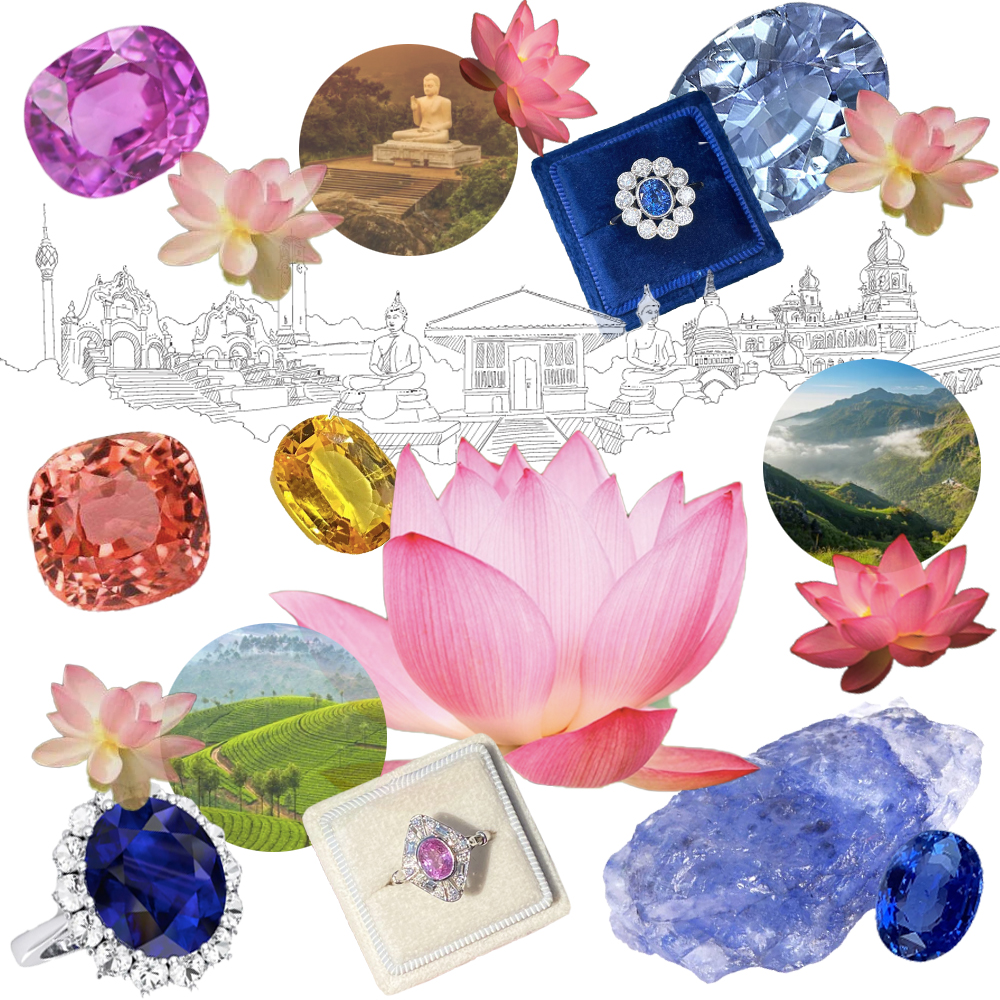
Ceylon is an old name for the South Asian island now known as Sri Lanka. Located in the Indian Ocean, Sri Lanka is a small pear-shaped country with a population of approximately 22 million people. It’s a primarily Buddhist nation with a rich cultural heritage which includes being part of the ancient Silk Road. Extraordinarily, it has long been known as the “island of gems,” as it enjoys ideal geological conditions that has led to it being incredibly abundant in high quality jewels. In fact, the island is one of the world’s richest concentrations of gems, including 40 different mineral species.
Source is important when it comes to gemstones because it can add historical context, the idea of scarcity, and the specific geological conditions of each location often affect the most important characteristic of a jewel, which is colour. Since Sapphires are found in more places in the world that the rest of the “big three,” which also includes Emeralds and Rubies, you’ll sometimes see source listed with Sapphires more often as a way of distinguishing their value, as well as describing their colour.
500 to 600 years ago, Sri Lanka was actually located in the middle of an ancient supercontinent. While seemingly the plot of a movie, this true slice of its history means that millions of years ago, perfect levels of pressure and heat ensured Sri Lanka would be rich in metamorphic gems for millions of years. Due to erosion, most of Sri Lanka’s gems are found in alluvial deposits, which refers to locations that are away from their original rock formation, such as riverbeds and streams.
What makes Ceylon Sapphires so special?
Sri Lanka has been supplying the world with fine quality Sapphires for over 2000 years, and some historians believe it is actually the world’s very first source of Blue Sapphire on earth. Along with Kashmir (which is no longer in operation) and Myanmar (also referred to as Burma), Sri Lanka is known for producing some of the world’s finest qualities of Sapphires in every colour. (A certain famous Blue Sapphire and Diamond halo engagement ring features a 12 carat Blue Ceylon Sapphire.)
Similar to Rubies, Sapphires that are sourced from metamorphic rock tend to be the most prized because their environments are low in Iron, which allows the gems to maintain a vibrant, bright hue. Iron is generally more prolific in basalt rock conditions, such as those in Australia, and tends to give Sapphires a darker tone and greenish tint.
Which colours are Ceylon Sapphires available in?
While gemstones can vary in tone and colour regardless of where they’re sourced, Blue Ceylon Sapphires are generally thought of as having an ideal violet-blue to blue colour, often referred to as “cornflower blue,” which is lighter and brighter than most. Any Sapphire which isn’t blue is considered a “fancy-coloured Sapphire” in the trade and Sri Lanka is famously considered a producer of the widest range of fancy colours in the world, including top quality Yellow, Pink and Purple varieties. It is particularly famous for Star Sapphires and Padparadscha Sapphires, a pinky-orange variety which gets its name in part from the Sinhalese word for lotus flower.
While there are tests that can be performed by a gemologist and organizations such as the GIA to determine the geographic source of a gem, keep in mind that one of the many unique traits of coloured stones versus Diamonds is how they are mined. Coloured gems are often sourced in a much more independent and artisanal manner, versus having large corporate structures behind them which track their every move. So, by their very nature, coloured gems, including Sapphires of every colour, tend to pass through many hands, sometimes even in border towns, and pinpointing the exact, original source can be tough for anyone to 100% guarantee. While geographic terms need to be used as accurately as possible, it’s important not to lean on them too heavily, and instead, use them to further inspire your love of jewellery, its history, and the stunning variety of colours they possess.
Comments Off on Katherine James Jewellery Custom Content, May 2022
Posted in Branding, Katherine James Jewellery
Tagged ceylon sapphires, coloured gemstones, Custom Content, Email Newsletter, Gemologist, GIA, jewellery consultant, jewellery history, jewellery writer, padparadscha sapphire, sapphires, Sri Lanka
Katherine James Jewellery Custom Content, March 2022

Coming Up Roses
You may not be too familiar with these stunning pink gemstones just yet, but there’s no doubt they are the perfect jewels to add some history and romance to your collection.
What is Kunzite?
Kunzite is one of three varieties of the mineral Spodumene—but the only one you’ll likely every find in a piece of jewellery. Its unique name comes from the well-known gemologist George Frederick Kunz (who famously worked for Tiffany & Co.), and discovered a large deposit of the mineral in California in 1902.
Kunzite is a stunning gem that is found in light pink to violet hues. While watercolour-like colours are beautiful (and currently quite popular), in general, the more intense the saturation of this gem, the more valuable and prized it is.
Kunzite is most often mined in Afghanistan, Madagascar, Brazil and the U.S. state of California. Fine qualities of Kunzite remain quite rare, and even though it is highly valued by both gem collectors and jewellery designers, its low supply levels make it quite uncommon, and therefore still relatively unknown to many.
Kunzite is sometimes heat treated to improve it’s rosy colour, however keep in mind that regardless of whether it’s been treated or not, Kunzite has the very unique trait of sometimes fading when exposed to high heat or extreme light, so be cognizant of how you are storing these jewels when you’re not wearing them. It also rates a 6.5-7 on the Mohs Hardness Scale and has cleavage in two directions, meaning it has the potential to chip or split if it were to suffer a hard hit. However, mindful care and a well-made and protective setting can ensure this lovely gem stays in optimal condition for a lifetime.
What is Morganite?
Spodumene is often compared to Beryl, because they naturally occur in similar colours. Similar to Kunzite, Morganite is a rosy pink gemstone, which is a variety of Beryl (along with Emerald and Aquamarine.) These two gems also share similar origin stories when it comes to their namesake, and were even discovered around the same time. Morganite was actually named after another American gem enthusiast, and colleague of George Kunz, J.P. Morgan. Morgan, of course, was a famous financier with a love of mineral collecting, and in 1910, Kunz actually bestowed the name Morganite on this rosy mineral.
Finding Morganite, which gets its pink colour from manganese, in highly saturated hues is very rare, but it can vary from a light pink, to more salmon, peach and orangey colours, as well. In these combinations, it can even look similar to Padparadscha Sapphires. Similar to Kunzite, heat treatment is often used to intensify Morganite’s colour, and sometimes nix any yellow or orange tint. Unlike Kunzite, Morganite’s colour is stable and has no risk of fading when exposed to UV light or heat.
Some of the best Morganite on the market is known to come from Madagascar, though these specimens are now seldom available. Other major sources include Brazil, Mozambique, Namibia and the U.S. Similar to Aquamarine, Morganites grow in pegmatites, and can be found in excellent transparency and in very large crystal sizes. This makes them an especially good fit for cocktail rings, and excellent value for your money regardless of how you choose to include them in your jewellery collection. Of course, their beautifully romantic colours also make both of these unique and uncommon gemstones a lovely and thoughtful choice for engagement and anniversary rings and gifts.
Comments Off on Katherine James Jewellery Custom Content, March 2022
Posted in Branding, Katherine James Jewellery
Tagged coloured gemstones, Email Newsletter, engagement rings, George Kunz, jewellery, jewellery expert, jewellery writer, JP Morgan, Kunzite, Morganite, pink gemstones, romantic gemstones
Katherine James Jewellery Custom Content, October 2021

Oh, So Retro!
Mid-century jewellery will forever be loved for paving the way towards a new type of glamour.
What is Retro Jewellery?
After the heyday of ultra-glamourous Art Deco jewels, the Second World War ushered in a new era of design. Born out of the necessities of restraint and war-time restrictions, the Retro jewels of the 1940s and 50s took on a new feminine aesthetic that was optimistic, without the need for the flash of large gemstones and expensive settings.
Instead, due to the restrictions on Silver and Platinum, pieces were often crafted in Rose Gold—an alloy of gold mixed with more widely available copper. (Read more about alloys and Precious Metals.) Since sourcing large gemstones, including Daimonds and rare gems such as Sapphires and Emeralds, was becoming too difficult during war times, jewellery designers got creative with uplifting flora and fauna designs featuring smaller accent stones on the must-have items of the day, including brooches, hat pins and even cigarette and vanity cases. Bouquets of flowers were a particularly popular motif, and perfect for allowing smaller-cut gems to shine. Charms also became quite fashionable, since they showcased the wearer’s personality without necessarily requiring any gems at all.
Unlike the splashy post-war decadence of the 1920s, the period after the Second World War was still tense with an air of anxiety and lavish spending on luxury items was not returning to fashion as quickly as the first time around. In the UK specifically, the government’s new post-war “purchase tax” was raised from 30% to 125% and made luxury goods such as jewellery nearly impossibly expensive to produce and purchase. However, the latter didn’t mean that jewellery wasn’t still on the menu. In a way, it was a as popular as ever, just with a few budget-conscious adjustments.
Regardless of the lack of resources, men and women were still feverish with “proper” dress, and jewellery and accessories were as popular as ever. While men turned to tie pins and cufflinks to complete their look, matching jewellery sets including bracelets (worn with or without gloves) and bib-style necklaces were all the rage for ladies about town. Pricier Diamonds also took a backseat to cheerful, coloured gemstones which were less expensive and easier to find in large, eye-clean sizes, including Amethyst, Citrine, Smoky Quartz and Aquamarine.
Not dissimilar to the Art Deco period, which was in many ways a post-WWI rejection of the frivolity and romanticism of the Edwardian period, the 1950s and 60s ushered in a sleeker design sensibility which represented more freedom, prosperity and excitement for the future. These styles, which were at their height of popularity in the 1950s, are now known as Mid-Century Modern. Scandinavian designers such as Georg Jenson were particularly popular, and showed off more streamlined designs with geometric patterns and chunkier accent stones.
Comments Off on Katherine James Jewellery Custom Content, October 2021
Posted in Branding, Katherine James Jewellery
Tagged aquamarine, citrine, Custom Content, Email Newsletter, jewellery writer, mid-century jewellery, retro jewellery
Katherine James Jewellery Custom Content, July 2021
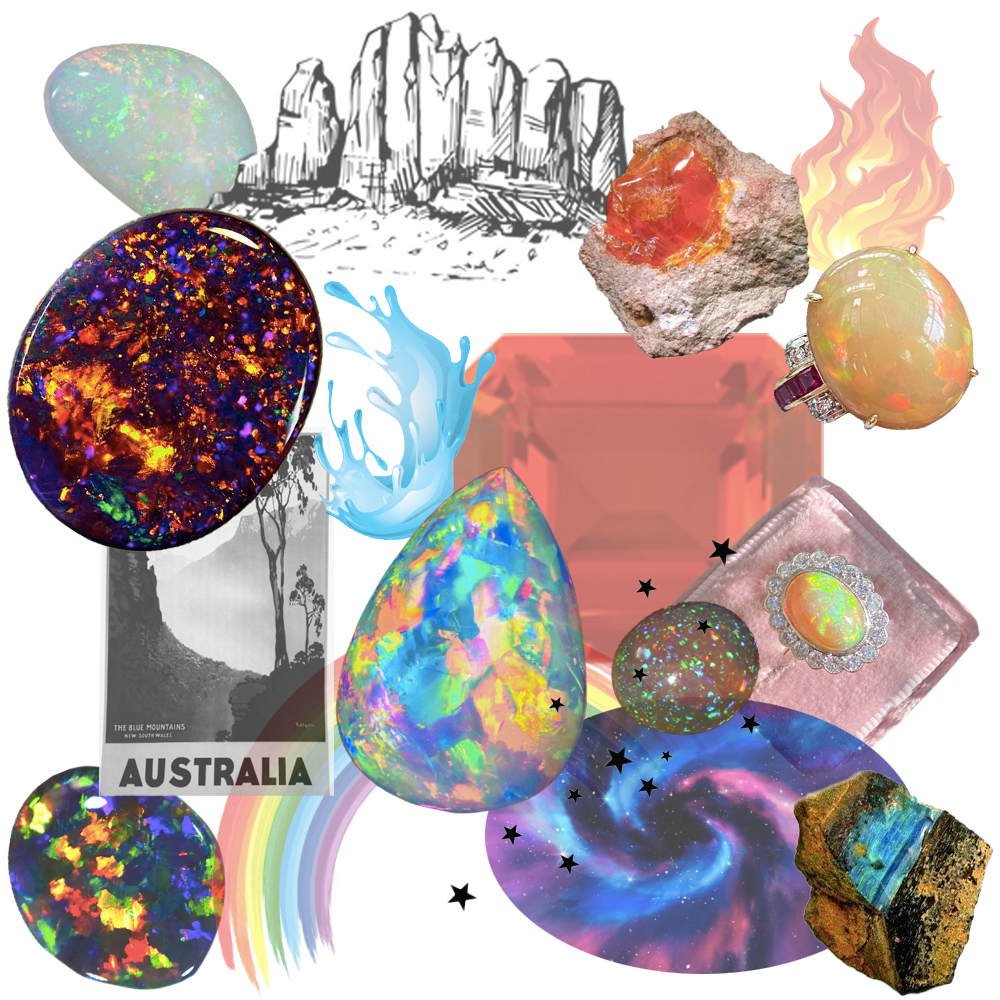
The Universe Stone
Why Opals are still one of the world’s most mysterious gemstones
The History of Opal
There’s no question that Opals are one of the most unique gemstones on Earth. For centuries, their phenomenal qualities have been compared to some of the most majestic and mysterious entities in the world, including galaxies, volcanoes, fireworks, and of course, true love. In ancient Rome, the gem was given the name “Opalus,” meaning precious stone, and they considered this rare gem, which they were absolutely fascinated by, the pinnacle of ultimate love and hope.
“Some opali carry such a play within them that they equal the deepest and richest colors of painters. Others…simulate the flaming fire of burning sulphur…and even the bright blaze of burning oil.” –Pliny, a Roman scholar, 75 AD
Throughout history many have been convinced that the kaleidoscopic colours often seen in Opal made it the most valuable and powerful gem of all. They compared it to the power of the whole universe, since it contained the hues of every other precious stone. This phenomenal effect is referred to as an Opal’s play-of-colour and the shades displayed, as well as their pattern, can greatly affect an Opal’s value.
How to Evaluate an Opal Gemstone
When it comes to value, the most important factor is how bright and vivid its play-of-colour effect is, and how well it stands out against the rest of the gem, without any cloudy or milky haziness. Next in importance, is how many different colours are displayed. An Opal which includes the entire spectrum of the rainbow is very rare, with red and orange being the most rare and desired hues, and green and blue generally considered more common. For example, even if an Opal only shows one or two colours, but displays large patches of red, it is still considered quite desirable.
An Opal’s background colour or “base colour” can also vary widely and have a huge effect on its value. White Opals with subtle play-of-colour have been the mainstream in the Western world for decades, and are surely one of the most common varieties which make up the bulk of commercial quality Opal jewellery. However, White Opal is available in excellent qualities, with the best having sharp and vivid play-of-colour with a full spectrum of colours and a crisp pattern.
What is the Most Valuable Opal?
Opals with very dark background colours, which appear an opaque black in reflected light, including green, blue, brown, dark grey and actual black are all considered Black Opals, and are the most prized of any specimen. Since their dark base colours are ideal for showing off vibrant play-of-colour, they’re considered the crown of the Opal world, and exceptional specimens can rival any other gem and sell of tens of thousands of pounds.
However, Opals can also have a transparent to translucent background (often referred to as “Crystal” or “Water” Opals), as well as a wide range of yellow, orange and red base colours, which are Fire Opals. Keep in mind that not every Fire Opal contains play-of-colour, but their vibrant hues, which is believed to be caused by trace iron oxide, still make them quite valuable and sought-after.
Opal’s Play-of-Colour Patterns
If all the colour possibilities weren’t complicated enough, Opals are also evaluated for the patterns of colour they display. This ranges from minimal phenomenon, which looks like small dots of colour and is referred to as “pinfire,” to large patches or “flashes” of play-of colour to the most desired, which is “harlequin.” Harlequin play-of-colour is the most even and well-balanced, and of course also the most rare and valuable. It shows large, near-rectangular-shaped patches of colour, which are uniform and tightly arranged, like a checkerboard or actual harlequin diamond pattern.
What is “Common” Opal?
Play-of-colour refers to ‘precious’ Opal, but not every Opal displays this phenomena. “Potch Opal” or common Opal, are stones without play-of-colour, but can still come in a variety of beautiful colours, including Peruvian Pink and Blue Opals, and are often still used in jewellery and other fine objects.
One of the characteristics which makes Opals so unique in the gem world, is that they do not have a crystal structure. Instead, they are considered amorphous, and contain a high percentage of water. If you were to look at a precious Opal under 30000x magnification, you would see a perfect, symmetrical stack of tiny spheres made of silica, which is composed of silicone and oxygen. The uniformity of this stack of spheres is what allows light to be broken into spectral colours, which creates an Opal’s trademark rainbow play-of-colour effect. Opals that have an irregular grouping of spheres of all different sizes are common Opals, and do not display phenomenon.
How to Clean and Care for Opals
Since Opals contain a lot of water, they can be prone to damage from moisture-loss. If they’re exposed or stored with excessive heat, dryness or bright light, they can suffer from crazing, which appears like a host of tiny spider web-like cracks on the surface of the gem. Instead, always store them in a dark, cool place and preferably in a silk pouch, which will not only protect them from being scratched by other jewels, but will also protect their moisture content. Since nearly all Opals are cut as cabochons to show off their play-of-colour, they must be worn with care since as a softer gem (they’re a 5.5-6 on the Mohs Hardness scale with fair to low toughness) they can be prone to damage if accidentally hit or scraped.
Overall, it is clear that Opals are a highly complex gem with one of the widest ranges of value in the gem world. Their status as a non-crystalline, phenomenal gem, which scientists are still not 100% sure how or when they were formed still makes them one of the most mysterious and alluring jewels, with a mystical history, passionate fanbase and enormous scale for value. Undoubtedly, regardless of how you take your Opals, they have an indisputable and highly revered place in any jewellery collection.
Comments Off on Katherine James Jewellery Custom Content, July 2021
Posted in Branding, Katherine James Jewellery
Tagged coloured gemstone, Custom Content, Email Newsletter, Gemologist, gemstones, jewellery, Jewellery cleaning, jewellery writer, Opal
 Megan Kirkwood
You must be logged in to post a comment.